The Retail Triage Problem
Screening a retail shopping center acquisition fast is a specific discipline, because the data a retail teaser hands over is thinner than what the underwriting model wants. Purchase price, total GLA, current NOI, an anchor tenant name, an occupancy figure, and a paragraph about the trade area. What the teaser does not include is a rent roll. Rent rolls come out later, and only for buyers the broker has decided are worth the effort of a call.
A full retail pro forma expects tenant-level lease data, and without it the analyst is stuck. Requesting the rent roll is a real cost on both sides, so the ask has to be earned. The screening question is narrower than the underwriting question: given only what the teaser supplies, is this center worth the rent-roll request and a site visit, or does it belong in the pass pile.
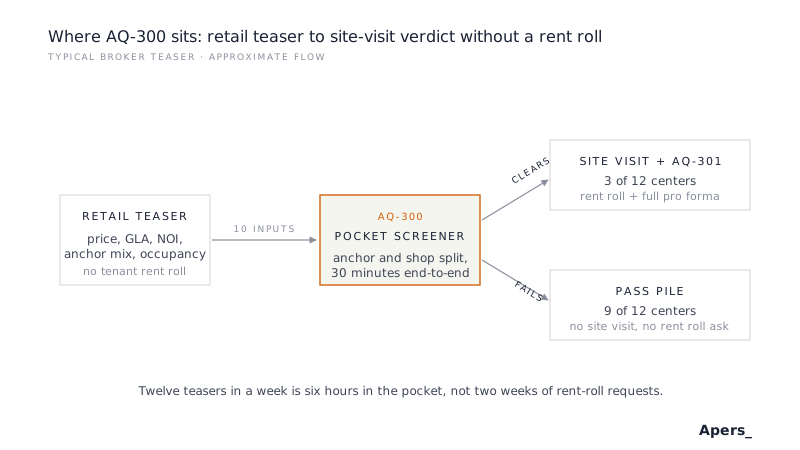
This article walks through the framework a retail pocket screener has to implement, then shows how AQ-300, the Apers open retail shopping center pocket, runs it on a single spreadsheet tab.
Why Anchor and Shop Are Different Buckets
The single design decision that makes retail screening work without a rent roll is the anchor / shop split. A shopping center is not one leasable box. It is two, and the two economies inside it move on different clocks.
Anchor space is the grocery store, the big-box tenant, the junior anchor. It occupies a large share of the GLA (typically fifty to eighty percent of a grocery-anchored center), pays a low base rent per square foot (often ten to eighteen dollars NNN), and sits on a long lease (fifteen to twenty-five years, plus renewal options). The anchor is a credit tenant. Its rent is close to a bond payment.
Shop space is everything else. Local operators, franchise service concepts, restaurants, small format retail. It occupies the remaining GLA, pays a rent per square foot that is two to three times the anchor rate, and sits on a shorter lease (three to seven years). Shop tenants roll inside the hold period, which means shop rent has real re-lease risk and real mark-to-market upside. It is where the business plan lives.
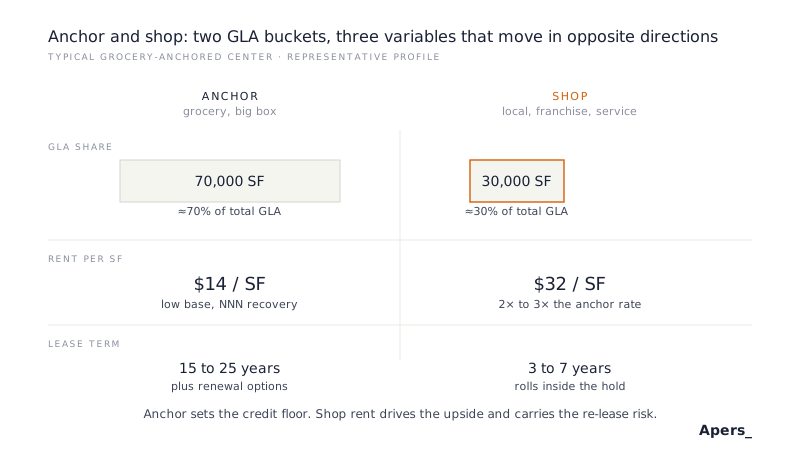
Blending them into a single rent per SF hides both the credit floor (what the center collects if every shop tenant went dark) and the upside case (what a re-tenanted shop bay could contribute). Splitting them at the screener stage is the difference between an informative verdict and a plausible-looking guess.
Ten Inputs From a Retail Teaser
A well-formed retail teaser supplies enough to populate a two-bucket screener. The pocket asks for ten fields. Nothing more, because the teaser will not provide it, and nothing less, because the framework cannot answer the pass/no-pass question without them.
- Purchase price and total GLA. The denominator for every per-basis metric.
- Anchor SF and anchor rent per SF. Either directly from the teaser or backed into from the anchor tenant name and market comps for that credit tier.
- Shop SF and shop rent per SF. Shop SF is total GLA minus anchor SF. Shop rent comes from the teaser's summary rent or from submarket in-line comps.
- Occupancy. A single blended percentage is enough at the pocket stage. Anchor occupancy is functionally binary and the shop occupancy is the number that moves.
- Operating expenses per SF. CAM, taxes, insurance. Retail teasers typically quote this, and if not the desk's submarket default is workable for triage.
- LTV and interest rate. The debt inputs, either from a quoted term sheet on the teaser or from the desk's current retail debt defaults.
A teaser that cannot supply an anchor tenant name and a headline occupancy is not really offering a shopping center. It is offering an option on one, and refusing to model past that input filter is itself a triage decision.
Five Metrics That Decide the Call
Given the ten inputs, five output metrics carry the pass/no-pass verdict on a typical retail acquisition. Retail-specific metrics matter more than the cross-asset defaults, because retail economics are not the same as multifamily or industrial economics.
- Going-in cap rate. Current NOI divided by purchase price. The reference number every retail buyer quotes deals against.
- Anchor rent share of total rent. How much of the center's income comes from the one credit tenant. A center where the anchor is ninety percent of the rent is a bond. A center where the anchor is thirty percent is a shop portfolio with an anchor amenity. Very different risk profiles at the same going-in cap.
- Shop rent per SF versus market. Whether the shop space is under-rented, at-market, or over-rented. Under-rented shop is the upside. Over-rented shop is a mark-to-market liability at the next lease roll.
- Levered IRR over the hold. The full-hold return net of debt. The primary metric for the retail investment committee.
- Debt service coverage ratio. The lender's check. Retail DSCR floors are typically tighter than multifamily because the cash flow is more tenant-concentrated.
Alongside the metrics, a proper retail screener raises flags for the common structural disqualifiers: an anchor with a lease that expires inside the hold (anchor turnover risk), an anchor rent above market (mark-to-market loss at renewal), shop occupancy well below submarket average, and negative leverage against the quoted debt. Any of those flags does not kill the deal. It forces the reviewer to state the assumption before requesting the rent roll.
The 2x2 That Kills Story Deals
Every retail verdict is really a verdict about two shop-side assumptions: what the shop space actually rents for, and how full the shop space actually stays. The anchor is bond-like. The shop is the source of variance.
The pocket runs a 2x2 sensitivity on shop rent per SF against shop occupancy. Five increments on each axis, twenty-five cells, one metric (typically going-in cap or levered IRR) in each cell. It is a smaller matrix than the full screener's 5x5, because at the pocket stage there are only two variables worth stressing and the other assumptions are placeholders that get expanded downstream.
Read the matrix the same way. If the deal clears the target across the diagonal, it survives realistic shop-side stress and earns the rent-roll request. If it only clears in the corner where shop rent is at the broker's estimate and shop occupancy is at the current headline, it is a story deal. If it dies in the middle of the matrix, the pass is easy.
How AQ-300 Runs the Framework
AQ-300 is the Apers open model that implements this framework on a single spreadsheet tab. Ten inputs at the top of the sheet, an anchor / shop rent split in the calculation block, a five-year annual cash flow projection, the five verdict metrics in a results panel, and the shop rent versus shop occupancy sensitivity in the bottom right. Thirty minutes end-to-end for a reviewer who knows the asset class.
The model deliberately excludes several things a full anchored retail pro forma would include. There is no tenant-level rent roll, because the teaser does not supply one and inventing one at the pocket stage generates false precision. There is no percentage rent, because it depends on tenant sales data the teaser does not carry. There is no cotenancy clause logic, because cotenancy lives in the shop leases and only matters after the rent-roll request. And there is a single blended NNN recovery assumption in place of the four recovery types (NNN, modified gross, base-year stop, gross), because the teaser does not break recovery out by tenant.
Each omission traded scope for solvability at the thirty-minute mark. Adding any of them would push the pocket into rent-roll territory and defeat the reason it exists.
When the Pocket Stops Being Enough
If the deal clears the pocket and the flags are stateable, the next step is to request the rent roll and move to a full retail pro forma. Pick the model that matches the specific business plan:
- Anchored retail, stabilized to light value-add:AQ-301 Anchored Retail Shopping Center
- Retail with real repositioning, re-tenanting, or outparcel work:AQ-331 Retail Value-Add Pro Forma
- A pipeline of retail teasers rather than a single deal:AN-004 Bulk Deal Screening Workbook
The handoff preserves the pocket inputs directly. Purchase price, total GLA, anchor SF, shop SF, occupancy, and debt terms all transfer to AQ-301 without re-keying. The full pro forma then expands what the pocket held constant. Tenant-level rents replace the blended anchor and shop rates. Four separate recovery types replace the blended NNN assumption. Percentage rent, cotenancy clauses, and per-tenant TI and LC assumptions come in.
Related Models
AQ-301 Anchored Retail Shopping Center is the full institutional-grade sibling. Same asset class, same anchor / shop framing, but with tenant-level rent roll, four recovery types, sales-based percentage rent, and per-tenant lease modeling for up to fifty tenants. AQ-300 is what the reviewer runs before deciding to build an AQ-301 model for a given center.
AQ-331 Retail Value-Add Pro Forma is the higher- strategy retail model. Use it when the business plan is real repositioning, aggressive re-tenanting, or outparcel development rather than a stabilized acquisition. AQ-300 will get you to the site visit; AQ-331 is where the value-creation math actually gets built.
AQ-001 Quick Acquisition Screener is the cross-asset version of the same triage discipline. Use it for a mixed pipeline where retail sits alongside multifamily and industrial teasers. Once the pipeline is retail-heavy enough that the cross-asset defaults stop earning their keep, AQ-300 is the asset-specific replacement.